The Stampede Cowboy
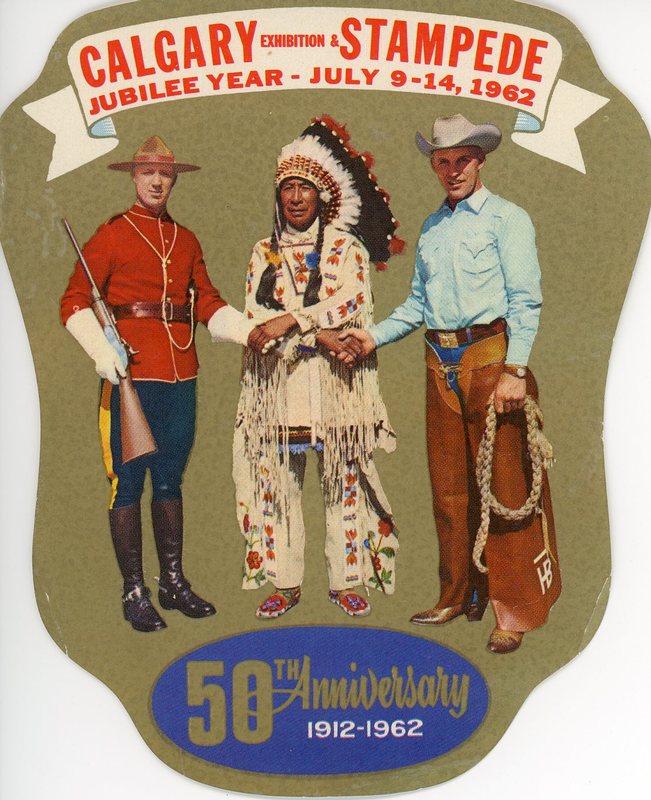
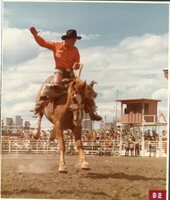
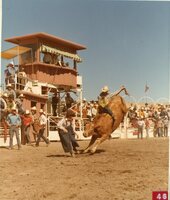
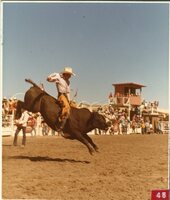
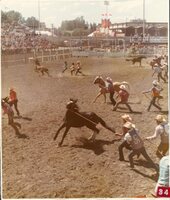
The cowboy presented at the Calgary Stampede is not merely a working cattleman but a curated character—a spectacle shaped for performance and public imagination. While many working cowboys did compete in rodeos, the “Stampede cowboy” is better understood as a symbolic figure crafted for the crowds: a rough-and-tumble hero from a fading frontier, performing daring stunts and dramatic contests of skill. Birthed from the Calgary stampede, the grounds were also the state of his myth making, helping him become a figure of Calgary historical folklore.
This figure represents more than just livestock management; he is a showman, a rugged individualist, and an icon of Western masculinity. But the Stampede cowboy is also uniquely Canadian. Though derived from American folklore, the cowboy has been adopted in Alberta—especially Calgary—as both a historical figure and a cultural myth.
One recurring image in Stampede promotional material is that of a cowboy shaking hands with a Royal Canadian Mounted Police officer and an Indigenous chief. This idealized trio symbolizes the Stampede’s attempt to harmonize Alberta’s complex and often conflicting histories: the settler mythology of the "untamed" West, the values of law and order represented by the Mountie, and the romanticized portrayal of Indigenous cultures and te “untame” wildness associated with that.
As the Calgary Stampede grew into a defining event in the city’s calendar and identity, the mythic figure of the cowboy evolved with it—becoming part of Calgary’s own folklore. Today, the “Stampede cowboy” continues to reflect both the imagined past and the values Calgary chooses to celebrate in the present.